
Fun and Magic - Magic Mike the Magician - Phone .(206) 501-5973
| Children
Magic | Adult
Magic | Business
Magic |Tavern - Restaurant Customer Builder Promotion | Learn Tie
Trick. | Performer's Rights | Send Mike A Donation |
Photo links 25
Web's Best Photo and Art Links
From Magic Mike
My collection of
links to photos of the best Hubble Space Telescope photos and other NASA
photos,
incredible landscapes, scenic wonders and wildlife animals,
AND Art Masters of the 10th through 20th Centuries from World Museums.
Back to the
full photo list page.
To Magic Mike's Joke Page
Parlor
To Magic Mike's Home Page
(See a magic trick!)
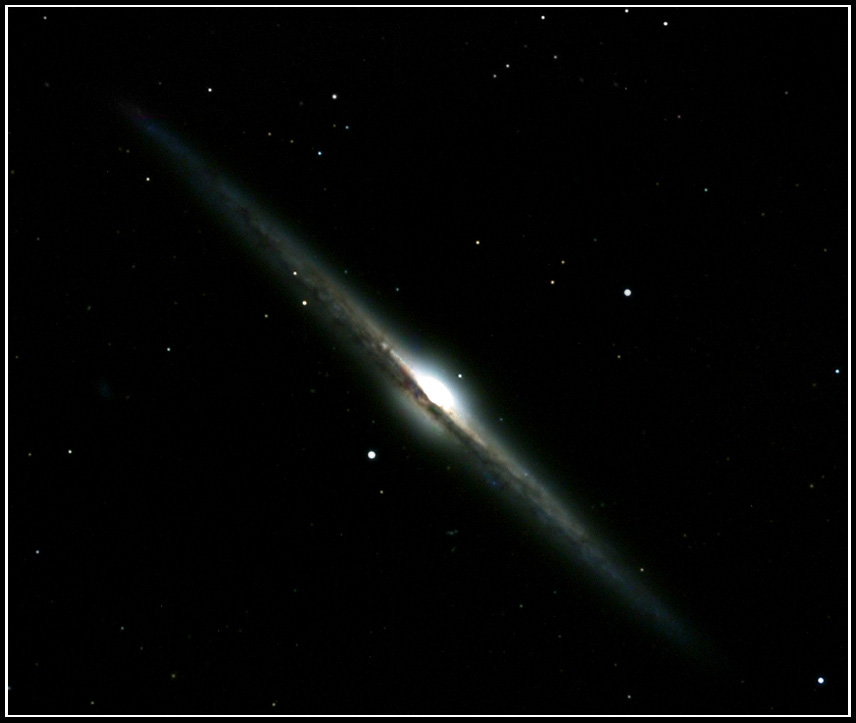
NGC
4565: Needle Galaxy Credit and Copyright:
William McLaughlin (ARGO Cooperative Observatory) Explanation: Presenting
a sleek needle-like profile the magnificent spiral galaxy NGC 4565 is viewed
edge-on from planet Earth. Its core of stars bulges from the centre of
a thin disk of spiral arms and dust. The core appears to be cut sharply
by dust lanes to dramatic effect in this composite image. NGC 4565's obscuring
dust lanes and pronounced core are typical of large majestic spiral galaxies,
including our own Milky Way. Authors & editors: Robert Nemiroff (MTU)
& Jerry Bonnell (USRA) NASA Technical Rep.: Jay Norris. Specific rights
apply. LHEA at NASA/ GSFC & Michigan Tech. U.
Upper
Waterfall, Elves Chasm - Elves Chasm
is a very common stopping point for raft trips since the lower falls is
an easy, short walk up from the river. A couple of us however decided to
scramble up the right side and explore further up. There were a couple
more falls and ended with a large open amphitheather. This image is one
of the upper waterfalls and shows the sedimentary layers on the right and
travertine deposits on the left. Roy V. Harrington, - PhotoTripUSA
Small
Waterfall, Monument Creek -Monument Creek flows into the Colorado
at Granite Rapid. Roy V. Harrington, - PhotoTripUSA.
Deer
Creek Swirls Deer Creek is one of the most popular side canyon
of the Colorado in this area. The creek has carved out a narrow slot about
half way through a tall vertical cliff. There is a tall waterfall visible
from the main river but in order to see the narrows one must climb all
the way to the top and then hike back along the slot. Roy V. Harrington,
- PhotoTripUSA
Vasey's
Paradise, This is one of the few images that is taken from right
near the Colorado River. In fact it was taken from a small island of rocks
in the middle of the river. This spring comes out of the middle of a tall
wall of Redwall Limestone and cascades down the layers of rock. In earlier
years this was a good source for clear fresh water, but now filtering is
recommended. Exploring the Grand Canyon by Roy V. Harrington - PhotoTripUSA
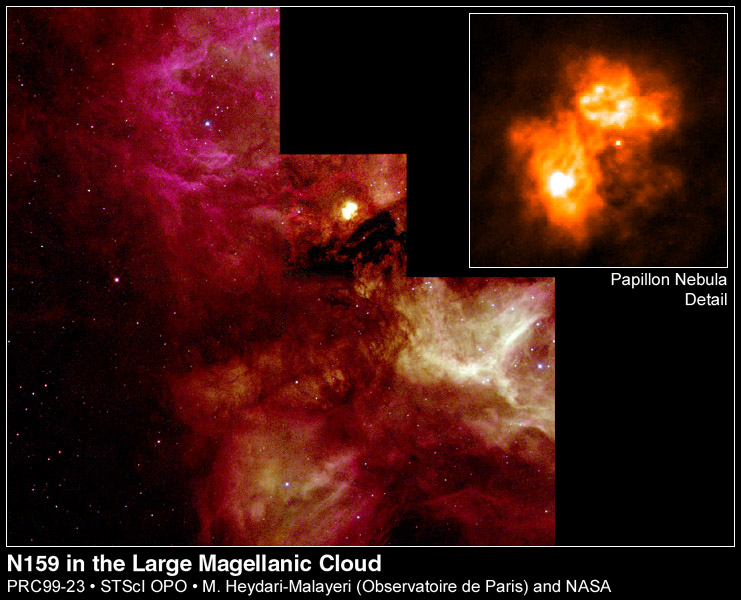
N159:
The Papillon Nebula Credit: M. Heydari-Malayeri (Paris Observatory)
et al., WFPC2, HST, ESA, NASA Explanation: In a search for massive stars,
the Hubble Space Telescope has peered into The Papillon (French for butterfly)
Nebula, also known as N159, which spans over 150 light-years across and
is located in the neighboring Large Magellanic Cloud galaxy, about 170,000
light years distant. Visible in the above picture are bright newborn stars,
dark filaments of dust, hot red-glowing hydrogen gas, and an unusual central
compact cloud, highlighted in the inset. Reasons for the bipolar shape
of the central cloud are currently unknown, but might indicate the presence
of unseen high-mass stars and a thick gaseous disk. LHEA at NASA/ GSFC
& Michigan Tech. U.
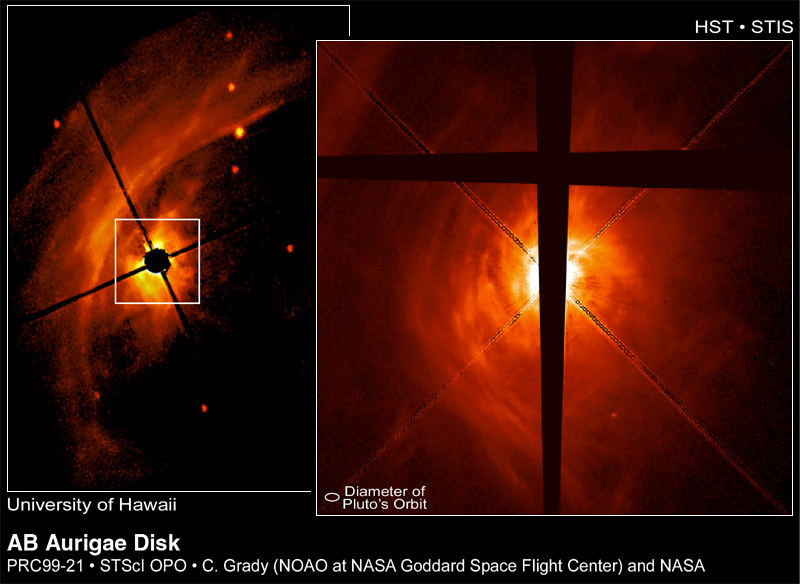
AB
Aurigae: How To Make Planets Credit: C.A. Grady (NOAO, NASA/GSFC),
et al., NASA
Explanation: This enhanced Hubble Space Telescope image shows in remarkable
detail the inner portion of the disk of dust and gas surrounding the star
AB Aurigae. Knots of material, visible here for the first time, may well
represent an early stage of a process which could result in the formation
of planets over the next few million years. AB Aurigae is a young star
(2-4 million years old), about 469 light-years distant. Its swirling circumstellar
disk is large, about 30 times the size of our solar system. Astronomers
believe planet-making is just beginning in AB Aurigae's disk because known
disks surrounding younger stars (less than 1 million years old) do not
show such clumpy structure, while disks of slightly older stars (aged 8-10
million years) have gaps and features suggesting that planets have already
been formed. LHEA at NASA/ GSFC & Michigan Tech. U.
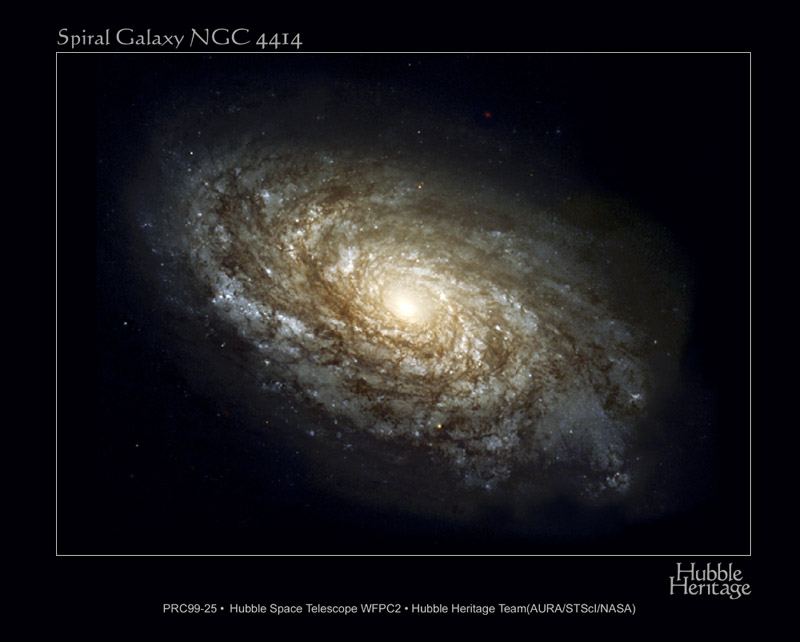
NGC
4414: A Telling Spiral Credit: W. Freedman (Carnigie Obs.) , L.
Frattare (STScI) et al., & the Hubble Heritage Team (AURA/ STScI/ NASA)
Explanation: Spiral galaxy NGC 4414 contains many Cepheid variable stars
that oscillate in a way that allows astronomers to estimate their distance.
It shows many classic spiral galaxy features, including thick dust lanes,
a central region rich in old red stars, and winding spiral arms glowing
with young blue stars. LHEA at NASA/ GSFC & Michigan Tech. U.
To enter Seattle Magic Mike the magician's site map click here.

Learn My Tie Trick
Nobody should drink the chemicals in the water!

Get the solution at SafeWaterInfo.org

Learn magic.
Amazing Magic Mike teaches his incredible "One Handed, One Second Windsor Trick."

The Adventures
of Super Stater WDFM Penn State radio
comedy cliffhanger from 1969.
Magic Mike the Magician
Seattle, Lynnwood, Everett, Bellevue, Redmond, Issaquah, Kent
No portion of this site
may be used, displayed, or linked to without written authorization.
All Rights Reserved Copyright 1996 - 2013
by Magic Mike Berger, Seattle except as noted.

Photo links 25
Web's Best Photo and Art Links
From Magic Mike
My collection of
links to photos of the best Hubble Space Telescope photos and other NASA
photos,
incredible landscapes, scenic wonders and wildlife animals,
AND Art Masters of the 10th through 20th Centuries from World Museums.
Back to the
full photo list page.
To Magic Mike's Joke Page
Parlor
To Magic Mike's Home Page
(See a magic trick!)
NGC
4565: Needle Galaxy Credit and Copyright:
William McLaughlin (ARGO Cooperative Observatory) Explanation: Presenting
a sleek needle-like profile the magnificent spiral galaxy NGC 4565 is viewed
edge-on from planet Earth. Its core of stars bulges from the centre of
a thin disk of spiral arms and dust. The core appears to be cut sharply
by dust lanes to dramatic effect in this composite image. NGC 4565's obscuring
dust lanes and pronounced core are typical of large majestic spiral galaxies,
including our own Milky Way. Authors & editors: Robert Nemiroff (MTU)
& Jerry Bonnell (USRA) NASA Technical Rep.: Jay Norris. Specific rights
apply. LHEA at NASA/ GSFC & Michigan Tech. U.
Upper
Waterfall, Elves Chasm - Elves Chasm
is a very common stopping point for raft trips since the lower falls is
an easy, short walk up from the river. A couple of us however decided to
scramble up the right side and explore further up. There were a couple
more falls and ended with a large open amphitheather. This image is one
of the upper waterfalls and shows the sedimentary layers on the right and
travertine deposits on the left. Roy V. Harrington, - PhotoTripUSA
Small
Waterfall, Monument Creek -Monument Creek flows into the Colorado
at Granite Rapid. Roy V. Harrington, - PhotoTripUSA.
Deer
Creek Swirls Deer Creek is one of the most popular side canyon
of the Colorado in this area. The creek has carved out a narrow slot about
half way through a tall vertical cliff. There is a tall waterfall visible
from the main river but in order to see the narrows one must climb all
the way to the top and then hike back along the slot. Roy V. Harrington,
- PhotoTripUSA
Vasey's
Paradise, This is one of the few images that is taken from right
near the Colorado River. In fact it was taken from a small island of rocks
in the middle of the river. This spring comes out of the middle of a tall
wall of Redwall Limestone and cascades down the layers of rock. In earlier
years this was a good source for clear fresh water, but now filtering is
recommended. Exploring the Grand Canyon by Roy V. Harrington - PhotoTripUSA
N159:
The Papillon Nebula Credit: M. Heydari-Malayeri (Paris Observatory)
et al., WFPC2, HST, ESA, NASA Explanation: In a search for massive stars,
the Hubble Space Telescope has peered into The Papillon (French for butterfly)
Nebula, also known as N159, which spans over 150 light-years across and
is located in the neighboring Large Magellanic Cloud galaxy, about 170,000
light years distant. Visible in the above picture are bright newborn stars,
dark filaments of dust, hot red-glowing hydrogen gas, and an unusual central
compact cloud, highlighted in the inset. Reasons for the bipolar shape
of the central cloud are currently unknown, but might indicate the presence
of unseen high-mass stars and a thick gaseous disk. LHEA at NASA/ GSFC
& Michigan Tech. U.
AB
Aurigae: How To Make Planets Credit: C.A. Grady (NOAO, NASA/GSFC),
et al., NASA
Explanation: This enhanced Hubble Space Telescope image shows in remarkable
detail the inner portion of the disk of dust and gas surrounding the star
AB Aurigae. Knots of material, visible here for the first time, may well
represent an early stage of a process which could result in the formation
of planets over the next few million years. AB Aurigae is a young star
(2-4 million years old), about 469 light-years distant. Its swirling circumstellar
disk is large, about 30 times the size of our solar system. Astronomers
believe planet-making is just beginning in AB Aurigae's disk because known
disks surrounding younger stars (less than 1 million years old) do not
show such clumpy structure, while disks of slightly older stars (aged 8-10
million years) have gaps and features suggesting that planets have already
been formed. LHEA at NASA/ GSFC & Michigan Tech. U.
NGC
4414: A Telling Spiral Credit: W. Freedman (Carnigie Obs.) , L.
Frattare (STScI) et al., & the Hubble Heritage Team (AURA/ STScI/ NASA)
Explanation: Spiral galaxy NGC 4414 contains many Cepheid variable stars
that oscillate in a way that allows astronomers to estimate their distance.
It shows many classic spiral galaxy features, including thick dust lanes,
a central region rich in old red stars, and winding spiral arms glowing
with young blue stars. LHEA at NASA/ GSFC & Michigan Tech. U.
Learn My Tie Trick
Nobody should drink the chemicals in the water!
Get the solution at SafeWaterInfo.org
Magic Mike the Magician
|